
When we discuss the quarter-life crisis, we often limit the conversation to personal milestones like degrees, salaries, and marriage. Yet there is a broader, collective crisis unfolding right outside our front doors. It is the visible decay of our urban ecosystems.
For anyone who has lived in or walked through the dense neighborhoods of our continent, the reality is undeniable. Too many of our cities and homesteads are losing the battle against filth. While the default reaction is to point fingers at municipal authorities or blame systemic state failures, the hard truth is that the honeymoon of passing the buck is over. Government policy can build infrastructure, but it cannot manufacture civic pride or collective discipline. If we want clean, orderly, and sustainable environments, the solution must begin with a radical shift in community ownership.
The Reality on the Ground From Pipeline to Kinshasa
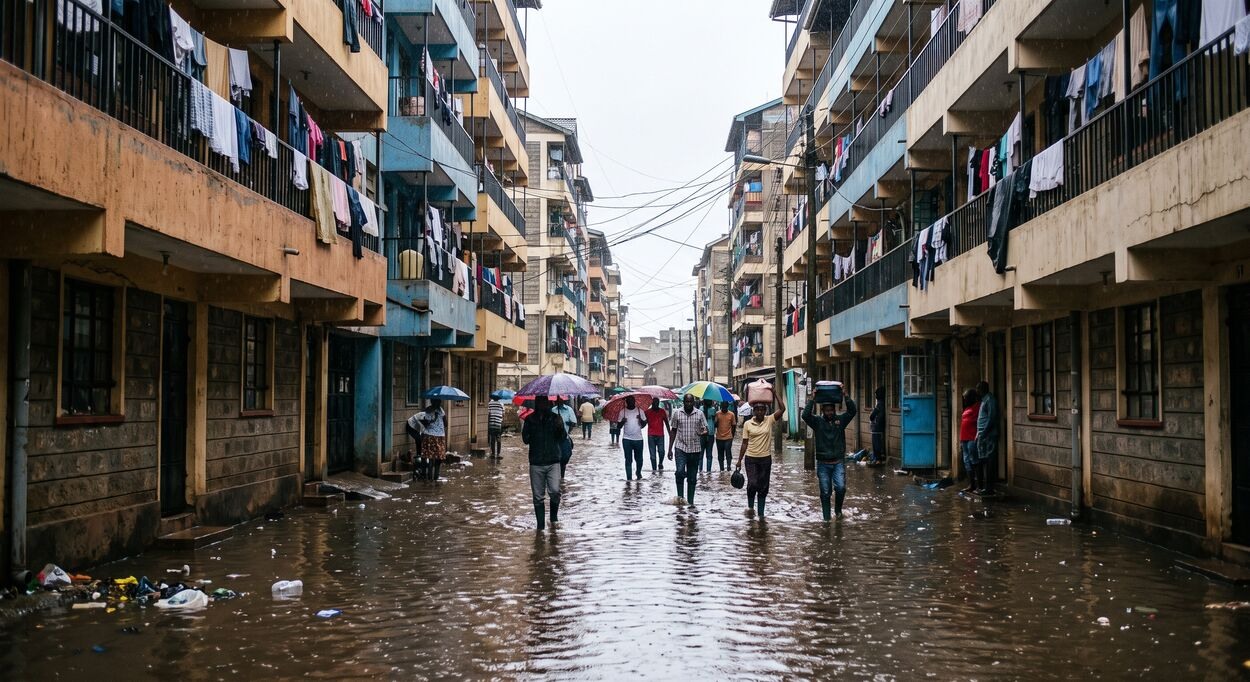
To understand the scale of this crisis, you only have to look at Pipeline Estate in Nairobi.
As a densely populated urban hub, Pipeline stands as a stark case study in infrastructural overload. When dry, the alleys are choked with mounds of uncollected household garbage and plastic film. But the true disaster happens when it rains. A brief downpour transforms the entire estate into a waterlogged grid lock. Blocked drainages overflow immediately, forcing residents to wade through a toxic mix of raw sewage, mud, and floating refuse just to reach their doorsteps.
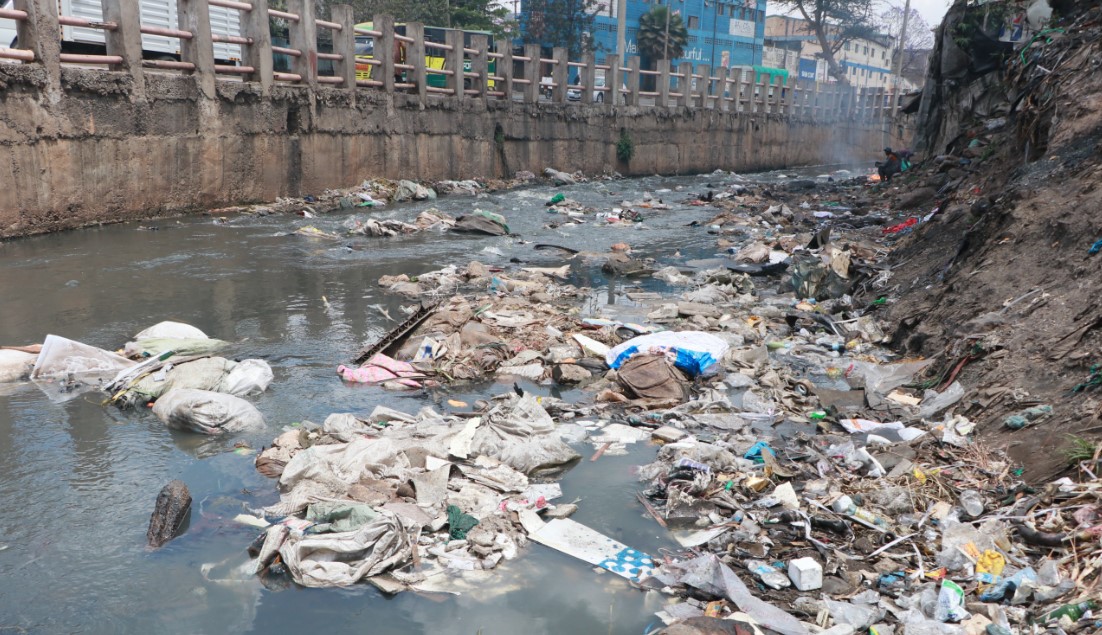
This structural failure is not unique to Nairobi. Across sub-Saharan Africa, urban migration has completely outpaced municipal planning, leaving several major cities drowning in unmanaged waste.
- Kinshasa (Democratic Republic of Congo) Widely dubbed "Kin la Poubelle" (Kinshasa the Trashcan), the mega-city produces thousands of tons of waste daily. The lack of formal disposal systems means the vast majority of plastic bottles and household trash ends up directly in the Ndjili and Kalamu rivers, causing catastrophic urban flooding whenever the region experiences tropical rainfall.

- Johannesburg (South Africa) The economic powerhouse is facing an unprecedented waste crisis as its major municipal landfills rapidly run out of legal airspace. This has triggered an explosion of over 2,000 massive illegal dumping hotspots across the city, where unauthorized waste haulers unload commercial trash directly into public valleys and green spaces.
- Abidjan (Ivory Coast) This West African metropolis generates hundreds of tons of plastic waste every single day, with less than 5% undergoing formal recycling. Single-use plastic bags and water sachets clog storm drains completely, severely altering local ecosystems and creating breeding grounds for disease vectors.
- Kampala (Uganda) The city's primary waste disposal site, the Kiteezi Landfill, has long surpassed its structural holding capacity. Without decentralized sorting systems, residential and electronic waste pile up indiscriminately in low-income settlements and wetland borders, poisoning local water tables.
- Lagos (Nigeria) Generating over 10,000 metric tons of waste daily, the coastal mega-city struggles with massive plastic leakage into the Lagos Lagoon. Informal dumping in open drainage channels turns seasonal rains into severe economic disruptions, paralyzing transit routes and overwhelming local public health systems.
The Vandalism Trap Why Top-Down Solutions Fail
The easiest response to these images is to demand that the state provide more bins, trucks, and cleaners. However, local governments have attempted these interventions, only to run into a frustrating wall of civic vandalism.
"We cannot clean a neighborhood where the community breaks the very tools meant to keep it orderly."
In Kenya, municipal authorities have repeatedly installed metallic waste collection bins along busy streets and residential zones. Within weeks, syndicates and individual actors dismantle them, cutting the metal apart to sell as scrap iron to local dealers. When public infrastructure is viewed as a short-term cash grab rather than a collective utility, top-down funding becomes a leaking bucket.
The Kigali Blueprint Cultivating Civic Responsibility
A lasting solution requires looking closely at successful models within our own borders, most notably Kigali, Rwanda.
Kigali is globally recognized as one of the cleanest cities on earth, but this status was not achieved solely through heavy policing or massive budgets. It relies on Umuganda, a mandatory, institutionalized day of community service held on the last Saturday of every month. On this day, traffic halts, businesses close, and citizens from all socioeconomic backgrounds come together to clear drains, plant trees, sweep streets, and repair infrastructure.
The brilliance of Umuganda is psychological. When a citizen spends their Saturday morning manually unblocking a communal ditch, they develop a psychological stake in that ditch. They are far less likely to drop a plastic bottle on the street or tolerate a neighbor doing the same. It shifts the cultural mindset from "the government will clean it" to "this is our home."
Actionable Solutions for a Long-Lasting Change
To replicate this success and solve the waste menace permanently, we must implement decentralized, community-driven strategies.
- Community-Based Waste Cooperatives Instead of waiting for central city trucks that rarely enter narrow estate paths, neighborhoods like Pipeline can establish local youth-led collection cooperatives. Residents pay a small, direct subscription fee to local youths who collect sorting bags door-to-door using handcarts, creating employment while ensuring garbage reaches central transit hubs.
- Value-Driven Recycling Pipelines To stop the theft of waste bins, we must make the waste itself valuable. Setting up localized plastic buy-back centers allows residents to trade sorted bottles and synthetic materials for direct cash or digital credits. When plastic is recognized as a financial asset, it stops being thrown into gutters.
- Smart Infrastructure Redesign Municipalities must pivot away from easily stolen metallic bins. Transitioning to heavy, reinforced concrete bins or underground drop-off shafts removes the incentive for scrap metal vandalism while keeping public waste contained.
- Grassroots Environmental Clubs True conservation starts in early childhood education. Introducing mandatory environmental care programs, school clean-up days, and waste-sorting competitions inside public schools ensures the next generation views orderliness as an unnegotiable social norm rather than an optional chore.
Cleaning Africa's homesteads and cities is not an architectural problem. It is a behavioral one. The moment we stop treating our shared spaces as open dumpsites and start viewing public order as a personal responsibility, our neighborhoods will transform.